
A smarter way of using the first pillar of the mobility budget


.svg)
The misconception most mobility budgets start with
For many employees with a mobility budget, the same misunderstanding keeps coming up: that it all comes down to a choice. Either you go for a company car, or you go for other mobility solutions. As if it's two separate options and you can only pick one.
That's exactly why Pillar 1 is still approached too narrowly today. You pick an electric car that fits your budget, sort out the lease, and the exercise seems done. Understandable, since it's the most familiar reflex. But that's where things often go wrong. Anyone who only treats Pillar 1 as a leasing decision quickly leaves flexibility and budget on the table.
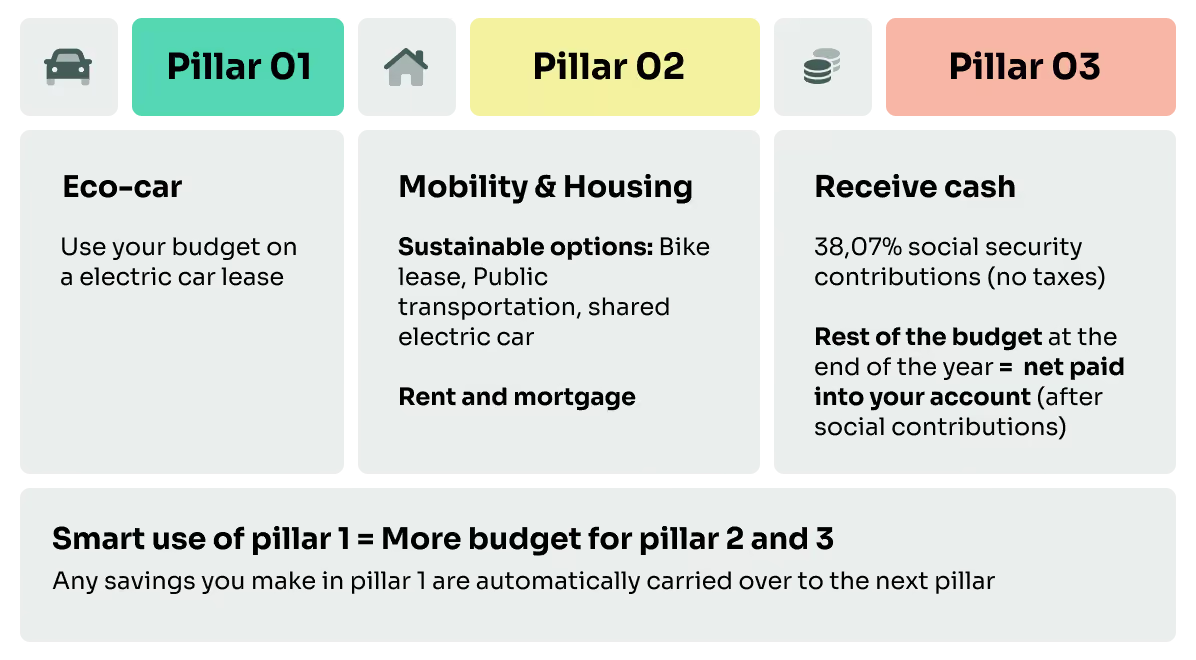
A mobility budget isn't an either/or story. It's a both/and story. The goal isn't to stuff as much car as possible into your budget. It's to create room for other choices. Want to understand how the three pillars of the mobility budget fit together? That's a good place to start.
How old habits block smart decisions
That many employees still think about their mobility budget this way isn't surprising. For anyone who doesn't work with it daily, it stays a technical topic. There are rules, conditions and tax nuances, and few people immediately figure out how to get the most out of it in practice.
And when something feels too complex, people fall back on what they know: the logic of the classic company car.
The real question isn't just which car you choose. It's how you use your budget in a way that works harder for you.
How do you use Pillar 1 as a lever within your mobility budget?
Anyone who wants to use their mobility budget smartly should look at Pillar 1 differently. Not as a standalone choice, but as a strategic part of a broader mobility mix.
Anyone who organises their car more cleverly, through a sharing platform or by deliberately choosing a different car class, can free up room for more. Curious about the difference between an electric company car inside or outside the mobility budget? It has a bigger impact on your choice than you might think.
Pillar 1 doesn't have to be a fixed leasing decision. It can be the lever that lets you use your mobility budget in a more targeted, flexible and smarter way.
How does BattMobility make Pillar 1 concretely smarter?
BattMobility takes a different approach: not starting from the question of which car fits within a certain budget, but from the question of how that same budget can work smarter for the employee.
That translates into two things:
First, through a TCO analysis. Instead of starting from "which car fits my budget?", BattMobility looks at the true total cost of a vehicle over its full period of use. Because two cars with the same lease price can have a very different total cost, due to differences in energy use, maintenance or residual value. That delivers surprising insights and leads to choices that better match real-world use. Want to calculate what your car truly costs? Use Mbrella's TCO calculator.
Second, through the platform itself. Anyone who leases a car through BattMobility can share that car with whoever they want, whenever they want. When someone else uses the car, they pay for that period. Your lease car partly pays for itself.
On top of that, the platform gives access to the full BattMobility fleet. Anyone who leases a compact car through BattMobility for daily use also gets access, through the same app, to other vehicles when the situation calls for it: a long-range car for a longer trip, a bigger car for moving house, a campervan for a weekend away. You pay for what you need, not structurally for what you only need occasionally.
That immediately removes the classic reasoning that holds many employees back from choosing smaller: "I need a bigger car because sometimes I need one." Through the BattMobility fleet, you always have that access, without having to lock it permanently into your lease.
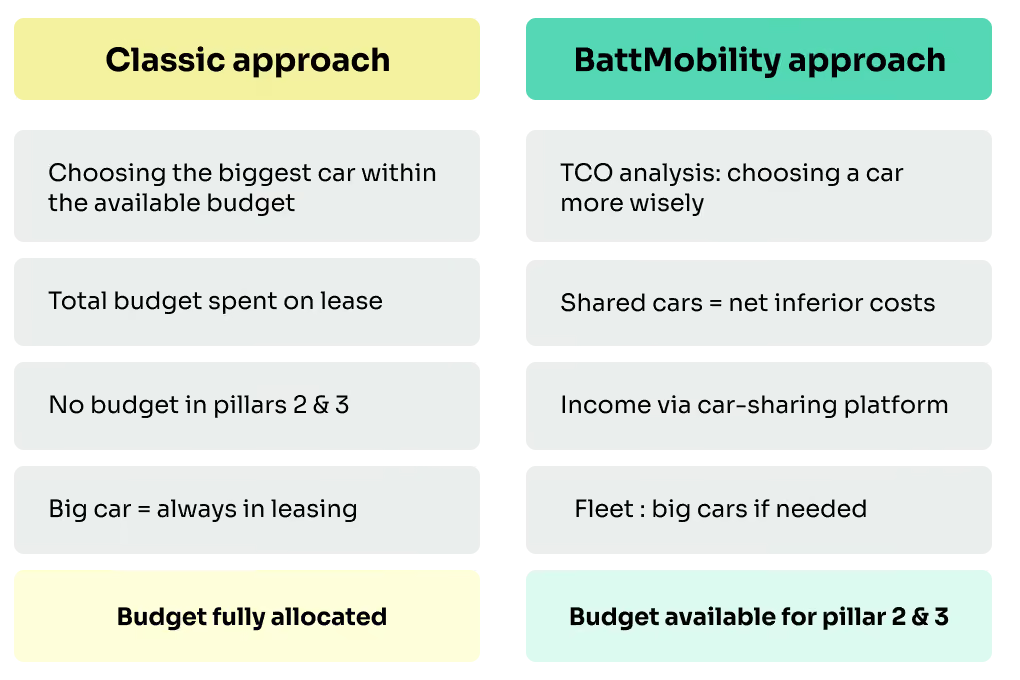
BattMobility is the only party that combines Pillar 1 and Pillar 2 in one platform. Not as two separate choices, but as one approach that ensures you keep more at the end of the month.
The car itself isn't the focus. What matters is how mobility actually works in daily life: changeable, context-dependent and rarely captured fully in one standard solution.
As a mobility platform, Mbrella makes sure all allowances, reimbursements and mobility choices are processed correctly and clearly, for both employee and employer. Partners like BattMobility are integrated into the platform, so employees manage their full mobility mix from one place. No admin headaches, just mobility that works.
How it works in practice
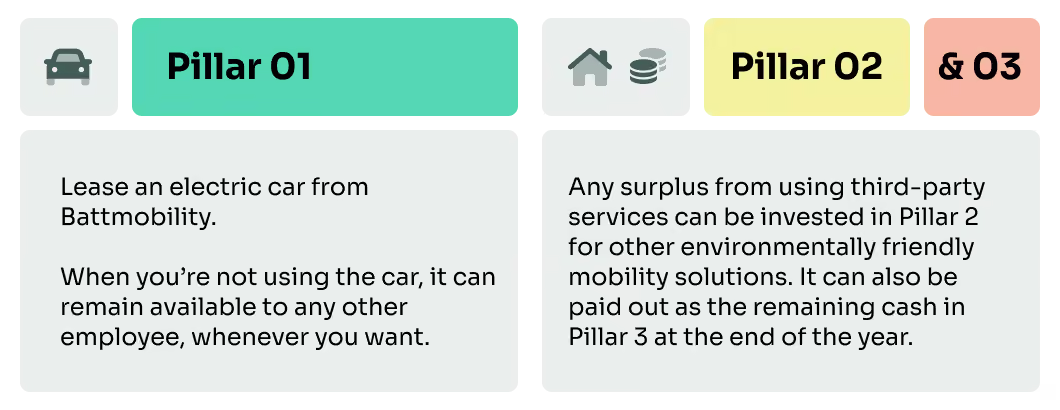
1. You want your own car, but don't want to block your entire budget
For many employees, having their own car remains important. And that works perfectly within Pillar 1. By sharing the car through the BattMobility platform, the net cost can go down and room opens up for other choices within your mobility budget. On top of that, you generate income when others use your car. Your car partly pays for itself.
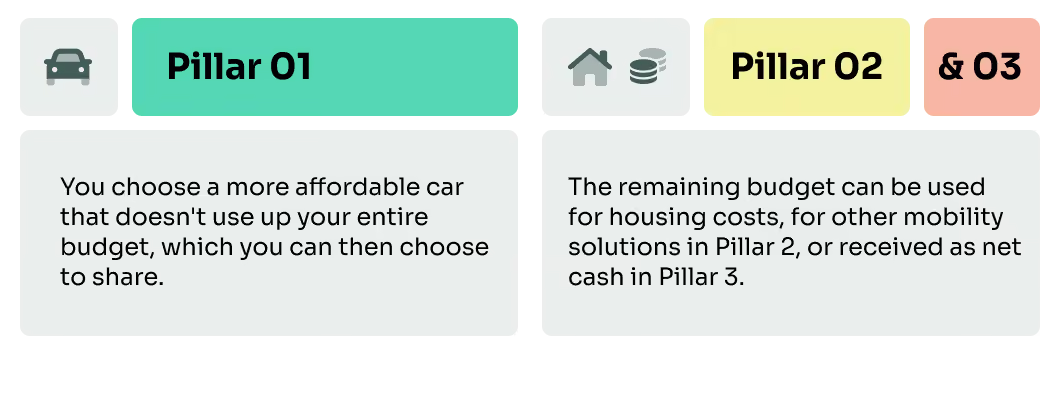
2. You deliberately choose a smaller or more affordable car
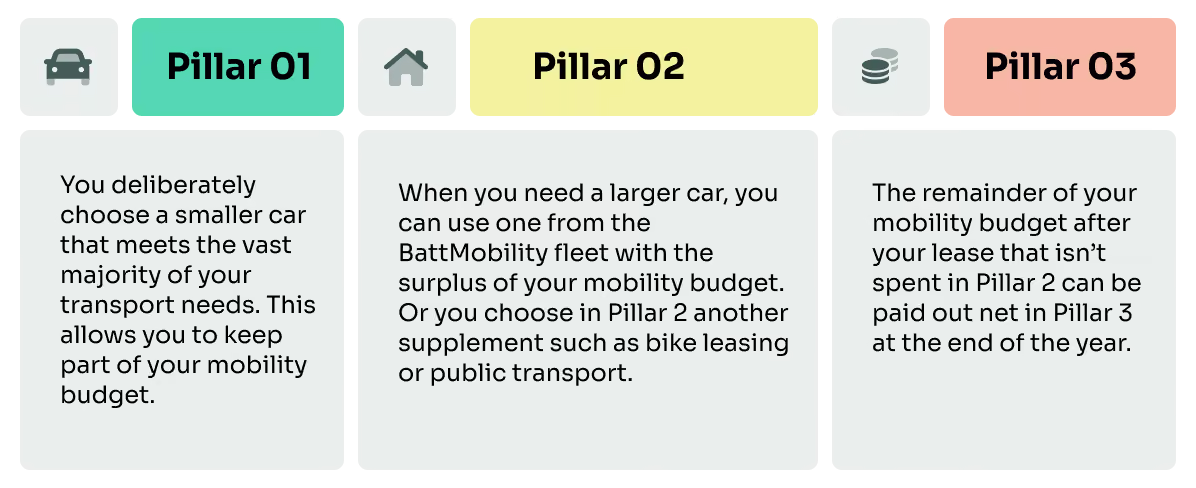
Many employees still reason from one reflex: if there's budget available, it should go towards the car. But that's not necessarily the smartest choice. Anyone who deliberately chooses a smaller or more affordable electric car in Pillar 1 keeps room for other expenses. Think mobility in Pillar 2, a cash payout in Pillar 3, or even housing costs if you meet the conditions. And for the moments when you do need a bigger or different car, the BattMobility fleet offers a solution through Pillar 2, without locking that need permanently into your lease.
3. You don't always have the same mobility needs
Some employees usually get by with a compact car, but occasionally want something bigger or a different type of vehicle. In a classic lease construction, you often end up paying permanently for a need that only comes up occasionally. Through BattMobility, the same app gives you access to the full fleet: a long-range car for holidays, a campervan for a weekend, a bigger car for moving house. Your base choice stays light and affordable. Your flexibility stays fully intact.
One budget, more possibilities
A mobility budget offers more than most employees get out of it today. Not because the rules have changed, but because the way of looking at it can change. Anyone who sees Pillar 1 as an endpoint stops just when things start to get interesting.
Anyone who chooses smarter can create more freedom with the same budget, keep more and match mobility to what actually matters: daily life, not a standard formula.
Curious what your mobility budget can concretely do for you? Calculate it with Mbrella's TCO calculator and discover what's possible.
This article was created in collaboration with BattMobility.