
Mobility budget vs. HR approval tool: which platform fits belgian mobility budgets?

.svg)
Can you manage the mobility budget with a regular HR tool?
More and more Belgian HR managers are asking themselves this question, now that the legal mobility budget is fast becoming the norm. Technically, yes, but in practice you hit a wall quickly. A general HR approval tool records expenses after the fact. HR checks every ticket against the law by hand. A dedicated mobility platform like Mbrella works differently:
- It checks the three legal pillars automatically.
- It monitors the tax limits per pillar.
- It links every expense to the right payroll code immediately.
That happens before and during execution, not afterwards.
From 1 January 2027, companies with 50 or more employees must offer a mobility budget. From 2028, that also applies to companies with 15 to 50 employees. Companies still relying on spreadsheets and generic tools are stacking up manual control work into a structural problem.
Why does a general HR tool break down on the mobility budget?
A generic expense or approval tool works fine for a cash receipt or a meal allowance. For the legal mobility budget, a few essential things are missing:
- No automatic legal validation. The mobility budget has strict rules per pillar. Pillar 1 covers the environmentally friendly company car. Pillar 2 covers sustainable transport and housing costs, with a radius condition of 10 km as the crow flies or 50%+ remote work. Pillar 3 is cash, taxed with a special employee contribution of 38.07%. A generic tool doesn't validate those rules. HR does that by hand, ticket by ticket.
- No automated approval workflow. In a general tool, someone reviews every request manually against the mobility policy. A dedicated platform automates that approval workflow based on preset budget limits and legal frameworks. Most requests approve themselves.
- No audit-proof log for the tax authorities. In case of an audit, you need to show exactly why an expense was processed tax-free. Generic tools typically log only date and amount. That's not enough for a solid audit trail.
Mobility platform or HR approval tool: comparison table
In short: an HR approval tool records mobility expenses after the fact. A dedicated mobility platform steers and monitors the whole process, from before to during execution.
What does a dedicated mobility platform actually do?
1. Automated approval workflow
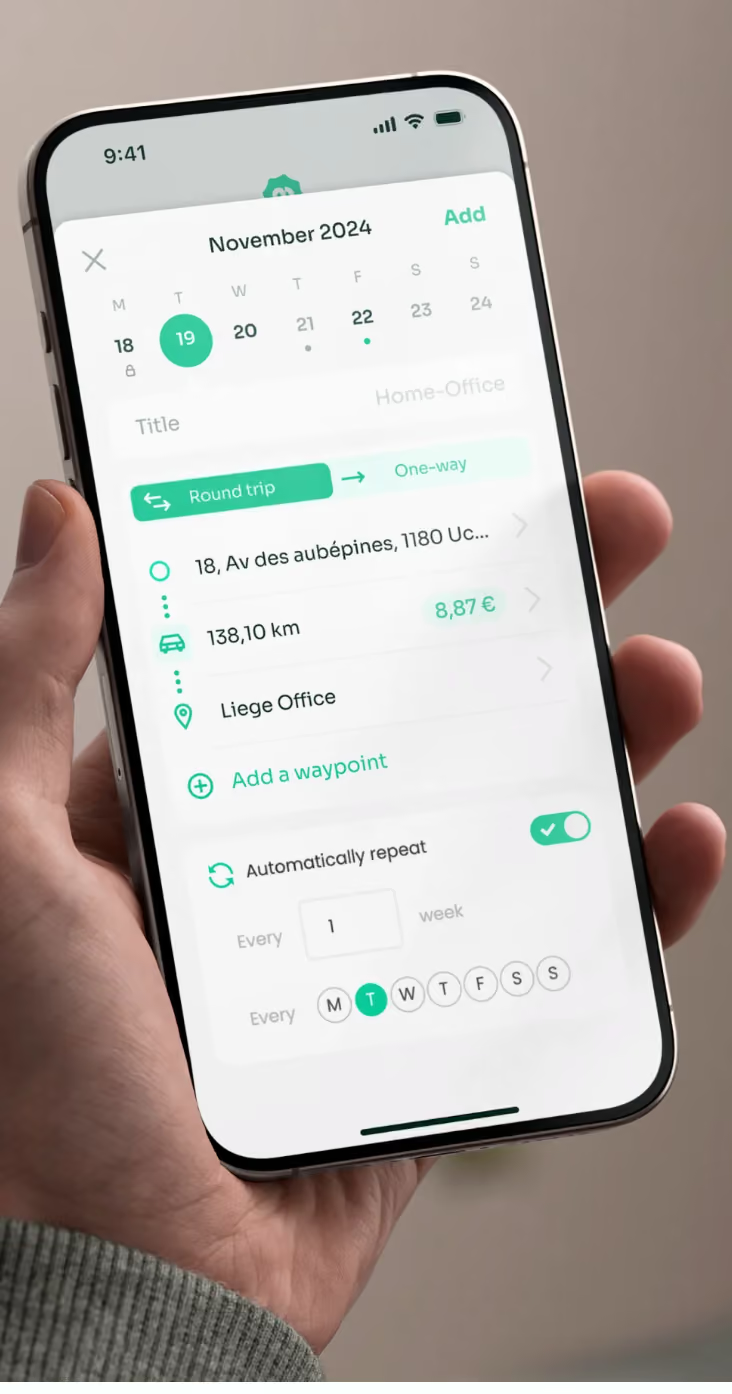
Instead of checking every receipt manually, Mbrella applies preset parameters automatically. Employees submit their expense via the app. Examples include:
- A shared bike or scooter.
- A train ticket.
- Housing income within Pillar 2.
The approval workflow checks budget limits and legal conditions instantly, without HR needing to step in.
2. Flawless audit trail
In case of a tax audit, you need to show why a mobility expense was processed tax-free. A built-in audit trail automatically records supporting documents, timestamps, and approval steps. That keeps your reporting 100% audit-proof for the tax authorities.
3. Tax automation and payroll integration
With one click, you generate a ready-to-use file for your social secretary. Think SD Worx, Partena, Acerta, or Securex. Tax exemptions under Pillar 2 and the special employee contribution of 38.07% on Pillar 3 are calculated automatically and error-free, without manual recoding.